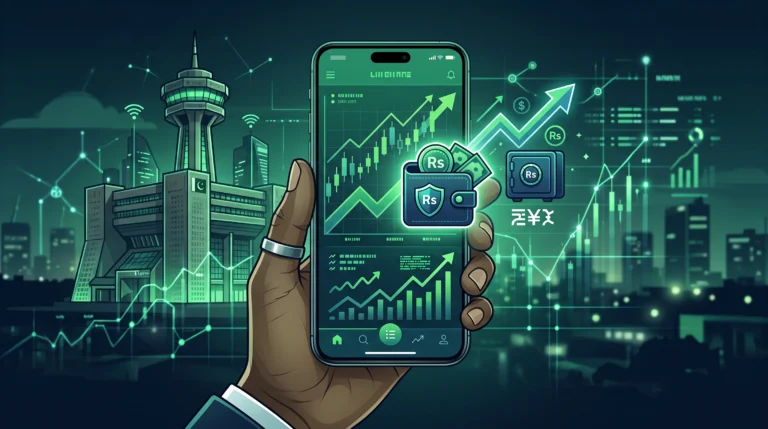

More than 12,000 people who receive support through the Benazir Income Support Programme (BISP) have now signed up for a new digital savings scheme run through JazzCash. The program is called the Hybrid Social Protection Scheme (HSPS), and it’s designed to help low-income households in Pakistan build a savings habit using a simple mobile wallet.
How Does This Scheme Work?
Here’s how someone actually joins: when BISP beneficiaries visit their local Tehsil office to collect their regular payments, JazzCash agents are there to explain the savings program. If someone decides they want to join, the agent records their consent and signs them up right there through the HSPS app.
Once enrolled, beneficiaries can start putting money into their JazzCash wallet. What makes this scheme stand out is the extra support behind it – the government adds 40% on top of whatever someone saves each quarter, and JazzCash chips in another 2%. This program is actually part of a bigger World Bank-funded initiative called BISP’s Crisis Resilient Social Protection Programme.
How Much Can Someone Save?
Eligible beneficiaries can save either Rs. 1,500 or Rs. 3,000 every quarter. They don’t have to pay it all at once either – it can be done through smaller instalments if that’s easier.
All this money, along with what the government and JazzCash add on top, stays saved for two years. After that period, beneficiaries can withdraw it, which can really help when unexpected expenses come up.
It’s worth noting that joining is completely optional, and someone can choose to leave the program whenever they want, as long as they give their consent to exit. On the flip side, if someone doesn’t make any savings contribution for three quarters in a row, they’re automatically removed from the scheme.
Who Can Join?
Eligibility isn’t random – it’s based on BISP’s National Socio-Economic Registry, which is the system the government uses to determine who qualifies for support. HSPS itself is a federal government program, and JazzCash has been chosen as its only implementation partner, working through an agreement with Mobilink Microfinance Bank Limited (MMBL).
Why This Matters
Arif Mahmood Chaudhary, who heads Public Sector Partnerships at JazzCash, said the scheme shows what’s possible when the public and private sectors work together on financial inclusion. He pointed out that combining BISP’s social protection role with JazzCash’s digital tools is helping underserved households build real savings habits and financial resilience.
The bigger goal here, especially for women and transgender beneficiaries, is to help people move beyond just receiving short-term financial aid and instead build something more lasting – real participation in Pakistan’s formal financial system.
The Takeaway
Programs like this show how mobile wallets are becoming more than just a way to send or receive money – they’re slowly turning into tools that help people build actual financial habits, even in low-income communities that previously had very limited access to formal savings options. With over 12,000 people already on board, it’s a small but meaningful step toward wider financial inclusion in Pakistan.