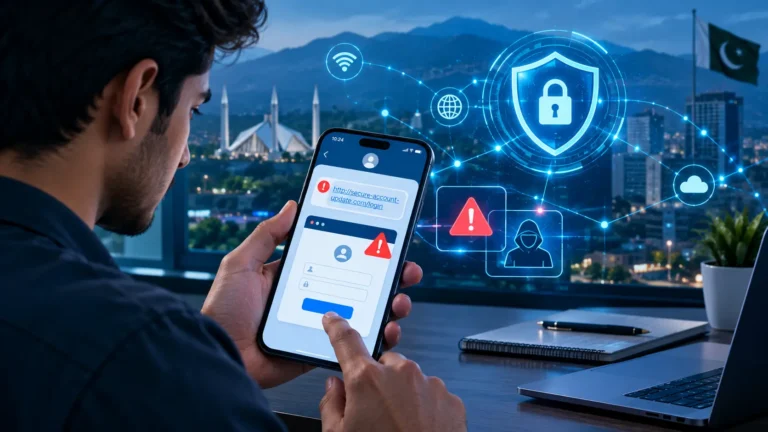

Ufone, Telenor Pakistan, and the Pakistan Telecommunication Authority (PTA) have collaborated on a cybersecurity workshop focused on strengthening the resilience of Pakistan’s telecommunications industry.
Titled “Zero Trust in a Hyperconnected Telecom Environment,” the executive knowledge-sharing workshop was held at the companies’ headquarters. It brought together regulatory representatives, telecom industry leaders, cybersecurity professionals, academics, and technical stakeholders to discuss practical ways to protect increasingly interconnected telecom networks.
The event focused on evolving cyber threats and the importance of stronger security practices as users, devices, systems, services, and third-party platforms become more connected.
What Is Zero Trust Cybersecurity?
Zero Trust is a security approach based on the principle that access should not be automatically trusted simply because a user or device is connected to a network.
Instead, access must be verified, permissions carefully managed, and security controls continuously reviewed. This approach can help organizations reduce the risks associated with unauthorized access and compromised accounts.
During the workshop, experts discussed moving beyond traditional perimeter-based security, which primarily focuses on protecting the boundaries of a network.
The discussions emphasized access verification, stronger access governance, privileged-access management, and measures to improve the resilience of critical telecommunications infrastructure.
PTA and Telecom Experts Discuss Emerging Cyber Threats
The workshop opened with remarks from Mukarram Khan, Director General of PTA Cyber Vigilance.
Technical sessions covered evolving threats to telecom networks, the implementation of Zero Trust principles, and the need to maintain these practices as technologies and cybersecurity risks change.
Industry and security expert Tauseef Aslam delivered a keynote address, while other industry leaders and cybersecurity professionals contributed to the discussions.
The event also highlighted the cybersecurity expertise of the Ufone and Telenor Pakistan cybersecurity team through technical knowledge-sharing sessions.
Participants took part in an audience question-and-answer session and an interactive knowledge quiz, allowing them to exchange practical experiences and discuss security challenges.
Why Telecom Network Security Matters
Telecommunications networks support mobile connectivity, internet access, digital services, and communications between businesses and individuals. As these networks become more interconnected, a security weakness in one system or access point can create risks for other connected systems.
Stronger access controls and effective security governance can help organizations limit unauthorized access and manage potential vulnerabilities.
For telecom operators, maintaining network security is also important for service reliability. Cybersecurity incidents can disrupt operations, affect connected services, and undermine customer confidence.
The workshop underscored that protecting telecommunications infrastructure requires cooperation between regulators, network operators, cybersecurity teams, and other industry stakeholders.
Zero Trust Requires Continuous Improvement
One of the central messages of the workshop was that Zero Trust is not a one-time technology deployment or a standalone product.
Instead, it requires an ongoing commitment to verifying access, applying appropriate security controls, and adapting to changes in network architecture and emerging threats.
This means organizations must regularly review permissions, manage privileged accounts, assess risks, and adjust security practices as their systems evolve.
Collaboration and knowledge-sharing can also help industry participants better understand common threats and develop more effective security approaches.
Ufone, Telenor Pakistan and PTA Reaffirm Cybersecurity Commitment
Commenting on the initiative, Shan ul Haq, Chief Corporate Affairs Officer at Ufone and Telenor Pakistan, said that building trust into how users, devices, and systems access services is becoming increasingly important as telecom networks grow more interconnected.
He highlighted the value of bringing industry stakeholders together to exchange practical experience and strengthen their understanding of Zero Trust.
Through the workshop, Ufone, Telenor Pakistan, and PTA reaffirmed their commitment to cybersecurity, resilient telecom services, and constructive engagement across the industry.
The initiative reflects the broader importance of cooperation in addressing cybersecurity challenges as Pakistan’s digital infrastructure continues to evolve.
While a workshop alone does not guarantee protection against cyberattacks, continued training, improved access governance, and the adoption of appropriate security controls can contribute to a more resilient telecommunications ecosystem.